Sunday, April 29, 2018

Send Nudes?


”Look at this photograph. Every time I do it makes me laugh.” For once, I can relate to a Nickelback song. This year, one of the New Year’s Resolutions a friend and I made is to take more photos. Considering it was a New Year’s Resolution, you already know I have only taken about three and a half new photos since January. We looked through our camera rolls and saw mostly memes and pictures of dogs. While those are great, we felt like we had so many missed opportunities having not taken photos of our friends or during anything fun we had done. These next few years are our glory days, after all, and there are only so many memories our brains can hold. And technology will probably not advance far enough for me to telepathically transfer those memories to my children when they ask me what my childhood was like. I know I wish there was something more than a few black and white photos left from my parents’ lives in the Eastern Bloc.

Looking at an old photo may not tell you everything about the situation or the event it captures. But even the “knowledge at bargain pric[e]” it provides is better than forgetting everything. I’ll take bargain brand toilet paper over no toilet paper at all. Susan’s Sontag argument seems very ignorant. It’s limited to those people that hate on concert videos, claiming people should “live in the moment.” And I agree, those vidoes are really annoying to watch. However, for one thing, I do not see how recording a video someone prevents the person from experiencing the concert. But anyway, the issue behind that becomes more of a social media problem. Photography does not deserve to be torn down because of social media; there is so much more to it than that.

Sunday, April 22, 2018

Plant A Tree Today


It’s Earth Day. Hopefully most of you were aware of that before seeing the new Snapchat filters, but that may be too much to ask. Our planet is no stranger to the “Janus faced god” that is science. The Earth knows all too well the “death and beauty, wounds and power: the piercing horns of the dilemma of science.” There have definitely been scientific discoveries that have immensely helped our planet and improved our understanding of nature. However, one of the greatest periods of scientific breakthrough, the Industrial Revolution, jump-started the anthropogenic climate change that has hurt the Earth for centuries now. When we discovered new sources of energy (fossil fuels) we were unaware of the significant implications that would follow – reintroducing fossilized carbon into the atmosphere it had not been exposed to for millions of years. Chlorofluorocarbons, or CFC’s, were an amazing breakthrough chemical used for refrigerants and propellants in aerosol cans. The hole in the ozone layer they caused was not discovered until decades later. These examples are a just a couple among countless others.

I love science. Being a scientist, Chet Raymo clearly does too. But humans have had the tendency to rush into scientific breakthroughs, often driven by fame or commercial gain, without anticipating or caring about the consequences that will follow. With this reckless attitude, science can easily become more of a “weapo[n] of destruction” than anything else. In honor of Earth day, I urge you all to exercise “a measure of restraint” with the amount of waste you throw away, gas you burn, or water you run.

Sunday, April 15, 2018

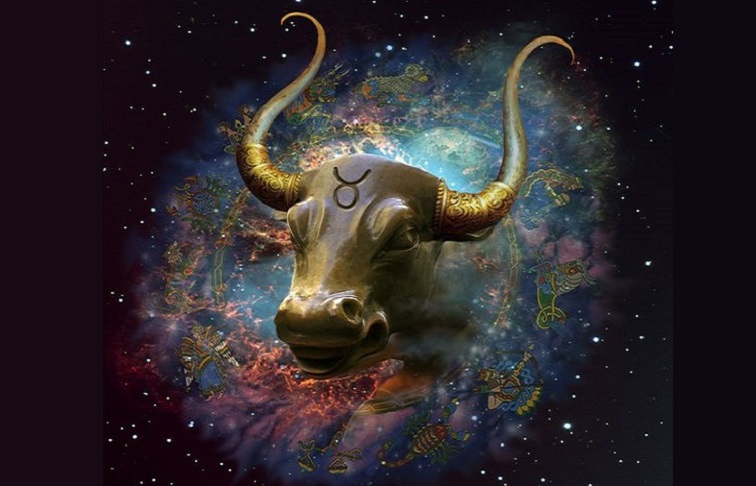
Charging Taurus


Image result for taurus


The sculptor Arturo Di Modica’s Charging Bull, in New York City was built as “a symbol of ‘the strength and power of the American people.’” The term “bullish” has been used to positively describe rising stock prices. However, with the addition of the Fearless Girl, the Charging Bull has instead become “a symbol of patriarchal oppression.” Besides a booming economy or “an aggressive threat to women and girls,” the bull is also a symbol of the astrological sign Taurus. This sign rules the planet Venus, the planet of relationships and romance. Taureans are known to be as stubborn as the bull that represents them. Yet, like other earth signs, Taurus is a sign of practicality and reliability. It has an eye for beauty and enjoys the physical pleasures of life. These down to earth individuals are generous and dependable. Being much more interested in astrology than economics, I first associate bulls with Taurus, not a booming stock market. To me, this is an example of how context is everything – especially for artwork. Adding the Fearless Girl to the Charging Bull drastically changes its context, thus completely changing interpretations of the meaning behind Di Modica’s statue. In this sense, I believe it is inappropriate and unfair to Di Modica to leave the Fearless Girl standing up to what was intended to represent economic success.


Sunday, March 25, 2018

In Plain American

Image result for the melting pot


“Growing up (as I did)” in an immigrant family, I learned “not just the joys but also the perils of bilingualism.” I started kindergarten not knowing English. That was about as long as I could hold out against inevitable assimilation. Learning English is a necessary part of living in the US. If you are a non-English speaking child, you take ESL classes to catch up with your classmates or you will always be behind. Besides doing schoolwork that is entirely in English, save for the foreign language class you may decide to take (usually a blow-off), there are the social disadvantages as well. Good luck making friends with someone you cannot communicate with. Even though there technically is no official language in this country there is still little choice but to learn English. There is a strong history of assimilation here, a practice that has not gone away. Whether it be positive for keeping the country united or negative for erasing diversity, it is present. Having English as an official language or not will not change anything. I am glad I was forced to learn English as a child. This does not take away from my own family’s culture; it simply allows me to take advantage of the opportunities in this country; it allows me to have a future here; it allows me to call the country I live in my home. Officially or not, English is the language of the US. Having it be the official language is just a formality that recognizes the condition that already exists.

Sunday, March 18, 2018

I Want the One I Can't Have


Image result for the catcher in the rye wants


We often live as slaves to our desires. Our lives are decided by what we want most and consist of attempts to fulfill those desires. Unfortunately this thirst often leaves us with endless dissatisfaction; our Id must always be balanced by our Ego and Superego; we must always sacrifice and compromise smaller desires to achieve our strongest ones. A lot of risk goes into living for what you want, and many times it is not worth the trouble. As Hazlitt writes, “to be in want of it, is to pass through life with little credit or pleasure.” The lucky ones may reach their final dream; their wishes may come true – but the countless others waste their lives away staring at the green light across the water.

As our great Gatsby fell, unable to hold onto what he desired most, so Hazlitt claims his character will suffer. By using the passive voice, Hazlitt emphasizes our passivity in satisfying our desires and also separates us from our unattainable dream. While Hazlitt writes about money, all wants have the same effect. Another famous use of the passive voice is seen in The Catcher in the Rye, one of my favorite books. The teenage boy, Holden, that narrates this novel is also no stranger to desire. He strives to preserve innocence and to be listened to. While the latter he eventually achieves after telling his story, at times it seemed as impossible as the former. The bad company and depressing situations he finds himself in all stem from his dissatisfaction and desires. He was not on the search for money, as Gatsby simply wanted Daisy’s love, yet no matter how noble the want, it ultimately breeds unhappiness.


Sunday, March 11, 2018

The Moth Effect

Image result for moth into flame


In the summer, my bedroom window is always open.  I removed the screen from it when I moved in, making it a large hole in my wall. Not only is it good for sneaking out, it is good for bringing the outside world in. Every night I’d go to sleep hoping an owl would stop by to visit me. That never happened, unfortunately, but I did manage to bring in a few visitors – of the bug variety. One of these guests was a “little hay-colored moth”. Though he was not nearly as lively as the bees or beetles, he had a lovable quality about him. He certainly was a “pathetic” creature, but I still saw him as “a tiny bead of pure life.” For some reason, I was drawn to this moth and hoped I was cool enough to be his friend. Weird, I know.

Anyway, he ended up being my roommate. We had some fun times together too. At night, if my phone’s screen was the only light source in the room, he’d come attack me. After that I set up his own personal lamp on the other side of the room. For a couple days, he’d always be around on some spot on the wall. I got used to looking for him. Then one day, I found him on the floor, on his back. He was dead. My most loyal companion for the past half a week had just died. I can’t say I was overwhelmed with emotion – it was just a moth after all, but I was a little disappointed. I was rooting for him, “on the side of life.” Though Woolf’s experience with a moth left her with the realization of the insignificance of life, my former roommate left me with the opposite sentiment. All life is significant. It’s true, our time on this earth is fleeting and we will be completely forgotten in centuries. But does that mean life is not significant? Our understanding of life is all relative and subject to different perspective. That moth lying dead on my floor never accomplished anything close to that of the average human. However, it lived up to its own potential and made an impact on at least one other organism. Woolf’s moth, and my own, even have a few hundred words written about them. Who knows if I’ll ever be able to say the same for myself?

Sunday, March 4, 2018

The Swifts


Image result for meat is murder cannibal culture
The most striking element of “A Modest Proposal” by Jonathan Swift is its morbidity. Humor cannot get much darker. By suggesting eating a “carcass of a good fat child” or using its skin for “gloves for ladies, and summer boots for fine gentlemen,” Swift’s very “modest” proposal becomes a classic and timeless satirical work. Despite being written in the 1700’s, the ironic and dark style he uses in “A Modest Proposal” is seen in deadpan comedy and morbid humor centuries later. Satire, sit-coms, and even songs demonstrate their Swiftian influences. As you may have guessed, it’s time to pick a musical example. Of course, when reading about cannibalism, The Smiths come to mind. Just kidding, this is probably one of the most vegan bands to ever exist. Their album “Meat Is Murder” would definitely conflict with Swift’s proposal. However, one of the most distinguishable features of The Smiths’ songs is their dark humor. This week’s sample is titled “Bigmouth Strikes Again” (1987). With an opening line like, “sweetness I was only joking when I said I’d like to smash every tooth in your head,” you can’t help but laugh. But it is so horrible at the same time. Even better, the song continues to mention being “bludgeoned in your bed.” What I’ve come to realize is with sardonic and sarcastic tones in songs, essays, whatever, it seems as though you can get away with saying very offensive things by labeling it as “satire.” Is Jonathan Swift really a misogynist? Does he really suggest fixing the economy by eating babies? Can we really ever be sure? In the song “Girlfriend in a Coma,” Morrissey says, “There were times when I could have murdered her.” Is the ironic tone of the song and all their work in general enough to assure us he’s just being funny? Although I’ll always be a little suspicious of Swift’s essay really being An Honest Proposal, his reputation is enough to appease the conspiracy theory side of me.

Sunday, February 25, 2018

The Curse of the Black Pearl

Image result for pirates of the caribbean flags


Upon reading “Consider the Lobster” by David Foster Wallace, I decided to look up the “sit-down restaurant called the Black Pearl on Harbor Park’s northwest wharf” (665). Unfortunately, either my googling skills are severely sub-par, David Foster Wallace made up this restaurant, or it was renamed sometime since 2003 to simply “The Pearl.” This was quite a disappointment for me, a die-hard Pirates of the Caribbean fan, because I was hoping for a restaurant based entirely on Captain Jack Sparrow’s beautiful and legendary ship, the Black Pearl. I have sold my soul to this franchise. Extra books, posters, themed amusement park rides, following the #potc tag on tumblr, the works. If I were to ever get a tattoo, long after my mother has passed away to prevent her from murdering me, it would most likely be matching one of the pirates. I’m disinclined to acquiesce to the end of the fifth film (Barbossa has always been my favorite) and demand a sixth no matter what decline in quality it may bring. Of course, having a trigger word like “Black Pearl” in the second paragraph of this piece made it a bit difficult to concentrate on David Foster Wallace’s writing.

However, the celebration of the torture of lobsters bouncing around in my head among pirates made me realize my vegetarian disgust towards the cruelty of the MLF revealed by David Foster Wallace is a bit hypocritical, given my love of those Caribbean crooks. Through his satire, David Foster Wallace criticizes not only the way Americans torture weaker beings (lobsters), but also how that torture is euphemized and even celebrated (“Light-houses, Laughter, and Lobster” at the “World’s Largest Lobster Cooker”). It’s easy for me to think, hey yeah that’s pretty messed up. But so is idolizing pirates, who are, by definition, not good people. And I know I’m not the only one that thinks pirates are cool. Ask any smart 5th grader and they’ll tell you pirates are cooler than cowboys, ninjas, aliens, and robots. So it’s not even just killing animals that we celebrate. We probably celebrate a lot of things not worth celebrating without even being aware of how not-worth-celebrating they really are. 

Sunday, February 11, 2018

What Is It About Men


Reading the title of the piece “About Men” by Gretel Ehrlich, I thought to myself: What Is It About Men? That is a goood Amy Winehouse song. Frank is such a great album. But once I reached the body of the essay, I was reminded of another of her songs, a few tracks earlier on the same record. The album’s opener, “Stronger Than Me” came to mind – not for its similarity to Ehrlich’s writing, but rather because of its contrasting sentiment. Ehrlich argues that “Instead of the macho, trigger-happy man our culture has perversely wanted him to be, the cowboy is more apt to be convivial, quirky, and softhearted.” Her piece brings up the manly stereotypes our society assigns to men and disagrees, saying real men are sensitive and compassionate too. Amy’s words express this exact stereotype. She claims that “[her man] should be stronger than [her].” And what is his weakness she is complaining about (because strength can be interpreted in many ways)? Well, his lack of strength consists of putting her in control and needed to be comforted. Amy writes, “All I need is for my man to live up to his role,” even prompting the question, “are you gay?” Clearly, his failure to meet society’s stereotypical mold for a man is the cause of her dissatisfaction. Comparing the two works made me realize that women play a large part in promoting this stereotype. Many women, like Amy, would not think they’d like to date a “ladyboy.” Because of this, men have such great pressure to be macho. I’m not a rancher like Ehrlich, but I’ve come to a decent understanding of teenage, rather than cow, boys (being a high school student and all). From this experience, sure, boys poke fun at each other for doing more stereotypically feminine things; but if said feminine boy gets a girl, it doesn’t really matter. So it’s somewhat ironic that women have the power to imprison men within this tough stereotype – apparently men aren’t that strong. 

Sunday, February 4, 2018

Blessed Big Time


“A quick jab to the head.” “A left to the head and a right and another left.” “a left hook to the head and a right to the head. It’s a left to the body and another left to the head. There’s a left cross and a right to the head.” Reading these lines from “Champion of the World” by Maya Angelou brought back memories from my own short lived boxing career. Although this passion of mine came to an end due to injury and the naturally changing path of life, my respect and appreciation for the sport will not fade. The new sense of discipline and motivation I gained were life-changing, along with the advice of my own inspirational Joe Louis – Lonny “Honeybee” Beasley. I had the privilege of training with Lonny, a champion boxer, regularly for a good part of a year. More often that not, if it was a Sunday, it was a morning spent with Lonny. Besides the “sit-ups for breakfast,” he fed me with immeasurable wisdom from his life full of experience. Long after I’m old without any trace of physical activity left in my body and when I can no longer remember the sound of his poorly hummed rendition of the theme from Rocky, the impact Lonny made on my impressionable teenage mind, through boxing, will remain. Boxing contains some sort of magic that allows it to transcend the limits of being considered a sport. It’s more than that. The way it will continue to shape my life in the days or months or years to come is still unclear to me; but for Maya Angelou and the rest of the African American community around her: boxing was equality. 

Sunday, January 28, 2018

If You (my mobility) Should Ever Leave Me


It is a fact of life that all “Temporarily Abled Persons” will most likely join the disabled minority at some point, unless they face a tragic, accidental, early death. I think no matter how much equal representation is given to disabled people, fear of losing something central to our lives, like our mobility, will always be present. I disagree with Mairs’ statement that transitioning to a disabled life “will be a good bit easier psychologically if you are accustomed to seeing disability as a normal characteristic.” My mom has been disabled for the past couple years because of severe spine and shoulder injuries from car accidents and surgeries gone wrong. She went from working 50-130 hours a week for a couple decades to 0, meaning she’s always around for me to grow “accustomed” to. My mother’s a well-off cripple, in that the government pays for her to stay home and she can spend her days doing her favorite activity -- online shopping. I tend to look at it as a nice early retirement, to save myself from more depressing alternatives; but I still cannot imagine myself being ok with constantly taking painkillers, doctors appointments and physical therapy a few times a week, being unable to sit or stand or walk for more than a short period of time, or not being able to bend or twist my body or pick up or pull or push medium-weight objects. It certainly wouldn’t be the end of the world, but it’d be the start of a miserable one. My sister, who admittedly has a much closer relationship with our mother than I do, tells me to have some sympathy, because for the past 25 years, her work has been her whole identity. Now she’s left being some sort of stay at home mom that can’t drive herself or do most of the chores around the house and doesn’t have kids left to be a mother to anyways because they’re already grown. Although I try to avoid this sentiment, and as far as I know my mom does as well, there will always be the undeniable negative perspective. Representation, in my opinion, will not help TAPs be cool with eventually becoming disabled; being disabled sucks. But knowing this, the disabled should be more equally represented because maybe it’ll suck a little less if they see someone like them.