Our environment is
degrading; there’s no denying it. With deforestation, pollution, and other
forms of abuse, this planet is not as green, clean, or biodiverse as it once
was. While it deeply saddens me that endangered species are driven to
extinction and old growth forests are being erased for their valuable timber,
many believe the economic gains from exploiting the land justify the loss of
the natural world. And this stance can be valid, to each their own, I guess. In
the world we live in today, I don’t blame the government or corporations for
operating the way they do. If this is the road to what is considered success,
by all means follow it. And it’s not just our capitalist system that encourages
this exploitation; look at how bad the commies are ruining the environment too.
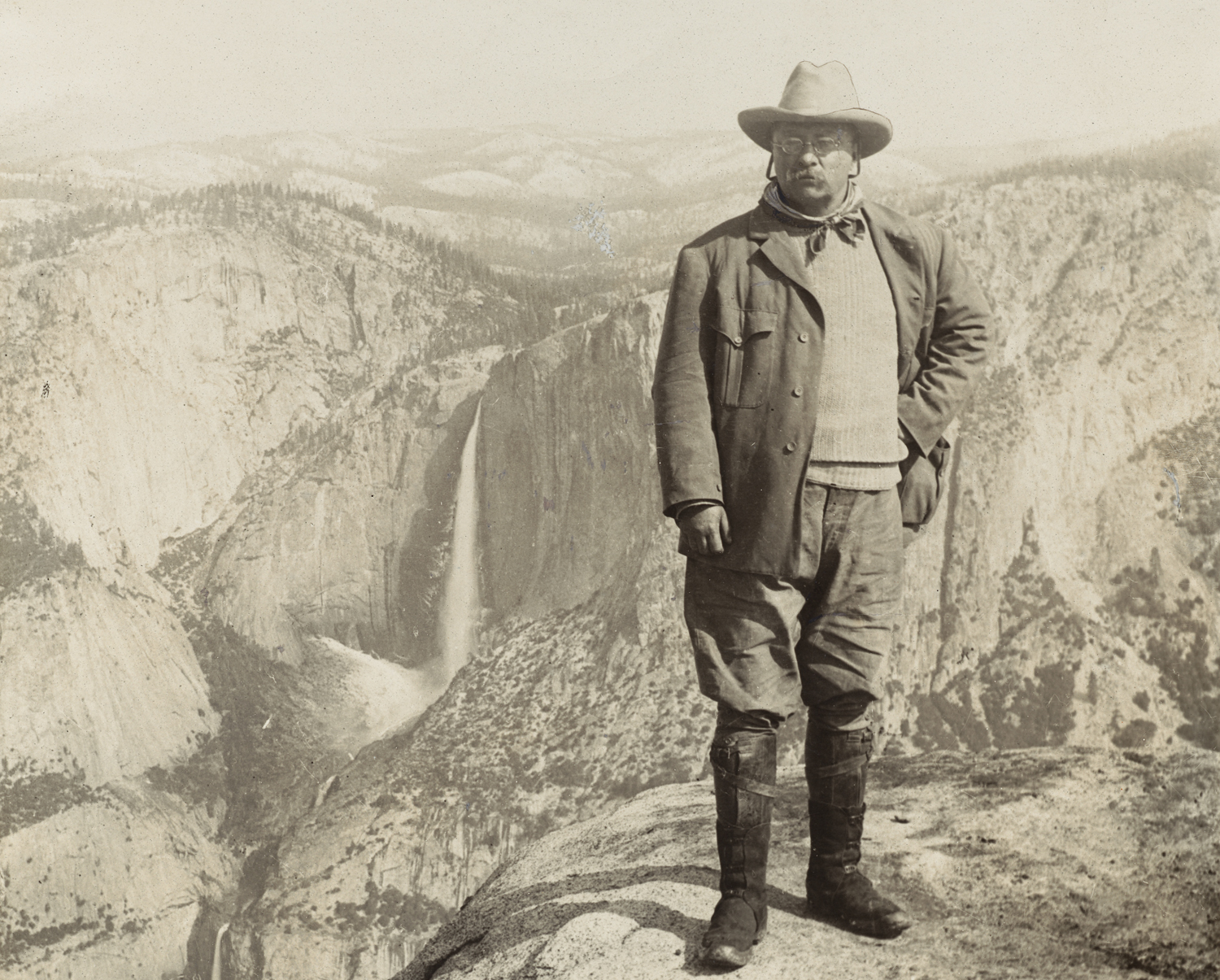
“The ecological crisis cannot be resolved
by politics,” because it extends beyond any system and is rooted in the values
of people themselves (Williams 944). I mean, sure it would help to not withdraw
from the Paris accords or shrink national monuments or repeal dozens of other
regulations *cough cough* but that won’t matter anyways because people have
lost their appreciation for nature. There’s the old Native American (maybe??)
proverb my sister told me when I was young that states, “ We do not inherit the
earth from our ancestors; we borrow it from our children.” This mentality, that
is the key to preventing WALL-E from becoming a reality, has been lost in the
modern day. Maybe we’ve already reached the point of no return. In that case,
let’s go to mars man.
Sunday, December 17, 2017
Sunday, December 10, 2017
Wake Me Up When This Semester Ends
Satire, parody, and the general criticism of society are seen
throughout all forms of media, and music is no exception. Besides being one of
my favorite albums of all time, (amidst Metallica’s black album, Led
Zeppelin IV, and Nirvana’s Nevermind) American Idiot by Green
Day chronicles the epic story of Jesus of Suburbia, an anti-hero that expresses
sharp criticism of American society and politics during the Bush
administration. The opening track, “American Idiot” establishes a
discontent and harshly sardonic tone. With lyrics like “subliminal mind fuck
America” and “maybe I’m the faggot, America. I’m not a part of a redneck
agenda,” a strong dissatisfaction with the state of the country is made clear.
This track, with its somewhat offensive language, criticizes the nation run by
the media and hysteria during the protests against the Iraq War and urges the
American public to change.
Then, Jesus of Suburbia is introduced. He is a kid from lower
middle-class suburbia that hates his life and those around him. The obvious
connection to Jesus Christ is ironic, but fitting in some ways as well. Jesus
of Suburbia leaves home to go the city, meets up with the rebellious
freedom-fighter, St. Jimmy, and with his drug abuse as an example, he is quite
sinful. Also, using a religiously associated name to satirize the
political society draws attention to the line between church and state,
creating more irony. Jesus of Suburbia attempts to start a new life and be
reborn from his unsatisfactory suburban youth. But, his journey can be seen as
a failure, as he kills off St. Jimmy, loses his love for Whatsername and
returns back home in “Homecoming”, accepting the life he wished to leave
behind. The lines, “I read the graffiti in the bathroom stall like the holy
scriptures of a shopping mall” further develop the ironic connection between
Jesus of Suburbia and religion. However, as his story progresses throughout the
album, he almost becomes a spiritual leader for all jaded youth, “from Anaheim
to the Middle East”, calling them to action. In the sense that both Jesus
Christ and Jesus of Suburbia had disciples like these, the reference is
somewhat appropriate.
The arrival of Jesus of Suburbia and his followers to the city, in
“Holiday” is especially politically charged, with a parody of American
government. This uptempo track represents their initial excitement for entering
the city, but this enthusiasm quickly dies off in the following track,
“Boulevard of Broken Dreams.” The attack on Bush’s invasion of Iraq is seen in
the lines, “The representative from California has the floor” and the
subsequent proclamations “Sieg Heil’ to the president Gasman. Bombs away is
your punishment” and “kill all the fags that don’t agree.” This imitation of
political leaders is an extreme exaggeration of their beliefs at the time, but
this form of parody definitely shows strong resentment. Although the criticisms
of the Bush administration are not at all subtle, this album satirizes the
attitudes of American society at the time and hopes to make changes in the
nation.
Sunday, November 19, 2017
Death of an Insurance Agent
This is about to be my most controversial blog post to date. That isn’t really saying much, because I avoid debates at all costs, but today I’m here to settle the biggest dispute of gloomy British alternative rock history. Which band reigns supreme in the world of mopey ‘80s post-punk: The Smiths or The Cure? Personally, I can see no reason for this controversy. The Smiths are the clear winners lyrically, musically, aesthetically, etc. The main arguments against the Smiths is that they’re funny and their frontman, Morrissey, is a jerk. Some are under the impression that being mind numbingly monochromatic and dreary like the Cure is necessary for a true angsty rock band. Because of this, they believe the wiseass remarks that are a trademark of the Smiths’ lyricism make them unable to achieve the properly depressed tone that is essential to the subgenre. Yes, these clever lyrics do embed humor throughout all their songs, but in no way does that keep you from thinking, wow, this guy is so miserable. They are just evidence of the unmatched lyrical talent of Morrissey. And when is being funny ever a bad thing? About Morrissey being a greedy jerk, okay, sure, he suffered from lead singer syndrome, but at least he’s a devout vegan. The fact of the matter is, the Cure is nothing special. Their songs are slow, witless, and nothing ever happens. In half the time it takes one Cure song to get out a few meaningless lines and redundant chords, a Smiths song sets the scene, cracks a joke, and wraps it all up with diverse and jangly guitar riffs.
Even though my stance has been made clear, I must say, melancholy and gloom are the first things that come to mind when I think of the Cure (that’s what they’re going for, so yes, I would consider that a compliment). That’s why I thought the coincidental connection to Song of Solomon was especially interesting. (This is where this post almost becomes relevant) The frontman of the Cure is named Robert Smith, same as the man that took “flight” on the day of Milkman’s birth after his work with the Seven days “[got] to be too much” (3, 158). To me, it made perfect sense. Robert Smith, from Song of Solomon, and his suicide serve as reminders of sadness and death whenever they are brought up throughout the novel. He is a ghost, one of them at least, that haunts the pages. Robert Smith of the Cure evokes similar feelings. We know names play an important role in the novel, and (even though this is totally a coincidence, because the Cure is irrelevant and wasn’t a thing yet when this novel was written) this is an example, to me at least, of the multiple layers behind names, the emotions they create, and the connections between them that can effectively convey a meaning. If you’ve gotten this far and realized the whole first paragraph was unnecessary, you’re right! But I’ll take any opportunity to express my cult-like adoration of the Smiths and bad-mouth the Cure ;)
Sunday, November 12, 2017
Crouching Dromedary
Names can hold more power than we often realize, but their significance is evident in countless ways, particularly in literature. From He-Who-Must-Not-Be-Named in Harry Potter, to the Washington family in “The Diamond as Big as the Ritz” by F. Scott Fitzgerald, and especially in Song of Solomon by Toni Morrison, names play an important role in developing major themes. By naming the evil and unfathomably wealthy family the Washingtons, making them “ direct descendant[s] of George Washington,” Fitzgerald is able to extend his criticism of the corruption of our nation to its foundations (86). In Song of Solomon, names are a prevalent motif, and the Dead family name in particular demonstrates Morrison’s connection between death and freedom. When Macon Dead’s father, Macon Dead, registered with the Freedmen's Bureau after his liberation, he became a Dead. Although this name technically was not correct, “it was new and would wipe out the past,” so it was never changed (54). “Dead” became their symbol of freedom. This connection is seen again in the “flight” of Robert Smith (3). His suicide is depicted as an escape, or a flight to freedom. As Pilate repeatedly describes her father as being shot “five feet into the air,” another image of flight and death is created (40). The description of the uplifting concept of freedom with negatively connotated death serves the illustrate the truly unfavorable reality of what “freedom” is for African Americans.
Sunday, November 5, 2017
I'm Very Well Read
I found myself, on a Saturday night, standing atop a folding chair, playing “Ballad of a Thin Man” by Bob Dylan out of a phallic speaker. When I reached the lines, “You’ve been through all of F. Scott Fitzgerald’s books,” I remembered the blog post I’d been putting off due to my lack of inspiration. After thinking for a few minutes, the connection between this song and The Great Gatsby became extremely obvious, especially after having examined the novel through a queer lens. The fact that the plot of The Great Gatsby is centered around heterosexual romances conceals the underlying clues alluding to Nick’s homosexuality, but looking at the novel from this perspective reveals that the signs are clearly there. Nick displays his attraction to Gatsby consistently throughout the novel, from saying “there was something gorgeous about him” in the first chapter, to describing his smile as “radiant and understanding” in chapter eight (2, 154). Other suggestions of Nick’s homosexuality are seen in his description of Mr. McKee as “feminine” and their vague interaction in which Nick “was standing beside [McKee’s] bed and he was sitting up between the sheets, clad in his underwear” (30, 38).
“Ballad of a Thin Man” similarly contains innuendoes hinting gay activities. With lines such as “sword swallower,” “hands you a bone,” and “Here is your throat back, thanks for the loan,” the song definitely holds enough insinuations of homosexuality to be able to craft an argument from a queer lens. Its reference of Fitzgerald himself could be analyzed this way, considering Fitzgerald’s own ambiguity and rumors of his romantic relationship with Ernest Hemingway. Besides the gay aspect that has forever changed my perception of The Great Gatsby, Bob Dylan’s artistry in general is related to Fitzgerald’s work. Many aspects of the 1920s are paralleled in the 1950s, including the Modernist movement Fitzgerald took part in. The Beat Generation of the ‘50s was the new form of Modernism, and the works of Beatnik writers and poets, such as Jack Kerouac, influenced Dylan’s writing. Bob Dylan’s was born from the anti-materialism and social criticism of the Beat Generation, which mirrors the ideals of Modernism of the ’20s, and the major themes of F. Scott Fitzgerald’s The Great Gatsby.
Sunday, October 29, 2017
There’s NOTHING a Little Hot-Glue Can’t Fix
I’m not sure what teenage girls are supposed to do when they hang out, but yesterday I spent a few hours with Malavika fixing her basement ceiling. Her little brother managed to kick a soccer ball with enough force to somehow knock down ten ceiling tiles and bend all the frames that were holding them up. We’re definitely not the most qualified handymen, but we had to at least make it look presentable before she had guests over. Our first method was pretty by the book, just put the frames up and the tiles inside them like we’re supposed to. To our frustration, it turned out the frames were too jank to function properly and the entire system itself was pretty faulty to begin with. We’d pop one into place and then the rest of the row would dangerously come swinging down at our heads. Safety goggles and helmets definitely should have been involved in the process. After several failed attempts, it was time to get creative. Again, we’re teenage girls, we don’t know what we’re doing, our only experience comes from our equally as unsuccessful DIY experiments (cue frightening home-made bath bomb flashbacks). Therefore, our next move was to take down the frames and tiles and hot glue them together. Despite some critique from our “friends,” this tactic was not half bad. The frames and tiles held together all right, only problem was we put them up the wrong way and everything went downhill when we tried repositioning it. Since we considered the first attempt a partial success, we tried re-gluing and giving it another shot. This time, we knew how to position it correctly, but our patience had run out and we didn’t exactly wait for the glue to dry properly.
It was at this moment when I was ready to accept defeat; I really wanted to go home. I honestly don’t know why I didn’t leave. Maybe it’s just because I’m a great best friend, or I’m hoping to get that financial compensation from the mesothelioma I probably contracted, but I stayed. A few more failures later, we had picked off quite a bit of the remaining glue and decided to be a little less stupid. Since we’re both avid gardeners, all we had on hand was a ball of twine, but that proved to be all that was needed. The ceiling you see in the “after” picture is not really attached in the way its supposed to be. The frames are just hanging in their general spots by twine tied to planks of wood, vents, cables, or nails up above the ceiling. Did we care that the inside was trashy and covered in crusty glue and the tiles had her dog’s paw prints all over them? Of course not, as long as it looks somewhat decent on the outside it was good enough. This is where this experience reminded me of The Great Gatsby, which is one of the things we met to discuss in the first place. From its epigraph about winning a woman over with your “gold hat” to the superficial displays of wealth and intellect throughout the novel, the major role of perception is made evident. Gatsby is obsessed with showing off his wealth through his lavish parties, mansion, and belongings. All of this is to make others, especially Daisy, perceive him as wealthy. Tom’s reference to books, ones he claims are “scientific,” reveal his desire to be seen as intelligent. In the world of the upper-class that Nick is observing, perception is everything. The “fake it ‘til you make it” mentality Malavika and I had towards her ceiling was based on our desire to just make it look good enough on the outside. If the ceiling comes crashing down a month from now, who cares? It looked presentable while the guests were over, and that’s the key. The perception of the ceiling is all that matters, mirroring the mindset of the superficial elites The Great Gatsby brings to life.
Saturday, October 14, 2017
"me abt to do my makeup"
Last night I came across this meme. The first thought that came to mind was, Anja?! After what feels like weeks of often painfully detailed analysis of the graphic novel Maus, the memories are hard to erase. Every time I close my eyes I see stripes and flies. This inescapable memory of Spiegelman’s sketches aids in his emphasis on Vladek’s inability to move on from the horrors he experienced during the Holocaust. Maybe Spiegelman intentionally included so many subtle details throughout his panels in order for readers to over-analyze everything, thus imprinting his story in our minds the way the Holocaust is imprinted in his father’s. I’m not saying I did not like reading Maus, buuut I sure will be glad when we finally end this unit. It was obviously nowhere near as traumatic of an experience as the Holocaust or the suicide of a dearly loved one - there’s no comparison. However, my desire to turn these books in and never see them again really helps me understand why Vladek would want to destroy Anja’s notebooks. His memories are incomprehensibly horrific, and Art’s anger and insensitivity towards this seems really self-centered and hypocritical. He calls his father a “murderer” for destroying a useful resource for his book, while also trying to express the pain of the memories that incessantly haunt and torture Vladek (159). The man already cannot escape the mental images of his past, at least let him erase the physical reminders. That’s just what makes sense man.
Sunday, October 8, 2017
It's like ra-a-in
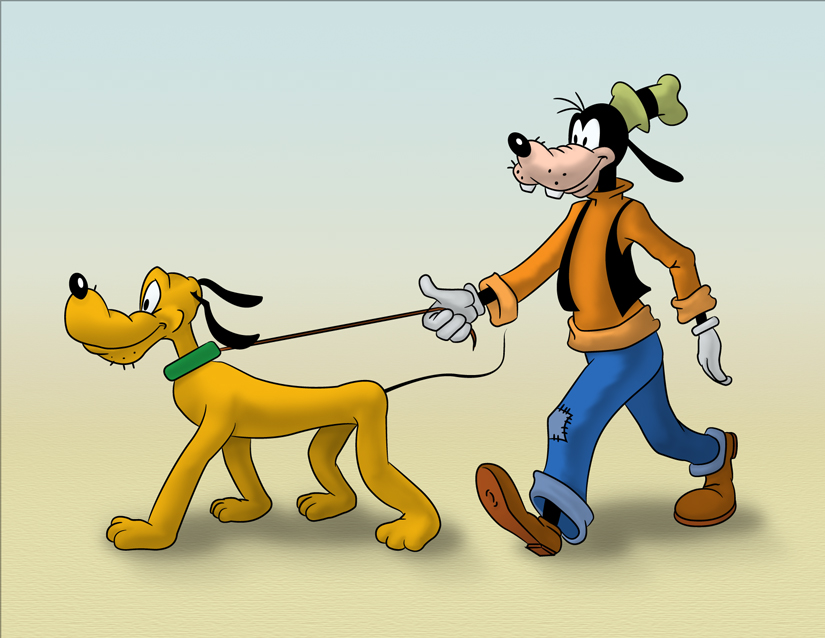
For a comic, Maus by Art Spiegelman sure isn’t very comedic. However, some scenes contain a bit of irony that could bring an almost-smile to the reader’s face. On page 147, Anja screams, “AIEEE!” because she spots a rat hiding in the cellar with them. Haha. This is one of those moments that makes you wonder, why is Pluto a pet but not Goofy? This Mickey Mouse connection is relatively insignificant at this point, but becomes prominent as Volume 2 opens with a quote about him ;). Considering Art uses animals in the place of humans, specifically replacing Jews with mice, this is quite ironic. Anja and Vladek, being essentially the same animal as rats, and being scared and disgusted by them anyways does not make a lot of sense. This ridiculous and irrational fear is pretty symbolic of the view towards Jews during the Holocaust. As depicted a couple pages later, a young Polish boy yells, “Help! Mommy! A Jew!” (149). The similarities between his reaction to Vladek, and Anja’s reaction to the rat, demonstrate perhaps another reason for Art Spiegelman’s choice of mice as his representation of the Jews. The cat and mouse relationship is symbolic of the way Nazis tortured Jews before eventually killing them, much like a cat toying with its prey. However, aside from this, the mouse is a symbol of its own. Disregarding the whole cat aspect, mice are still seen as filthy rodents, evoking fear and disgust in humans. This view towards the rodents is a parallel to the view towards Jews. Furthermore, the seemingly hypocritical reaction of Anja towards the rat matches the superficial divisions between the Jews and the Polish. Seen several pages back, Vladek simply puts on a pig nose and is treated with respect (64). This is similar to Vladek telling Anja that the rat is just a mouse to reassure her. Are mice really that much better? Rodents are all just gross. However, this simple and slight change is enough to ease her nerves. A rat being called a mouse is as much of a fix as a mouse putting on a pig nose, it barely does anything. But people are so quick to reject anything slightly different, and quick to accept anything that is the same, that this change is all that is needed.
Sunday, October 1, 2017
February 19th ~ March 20th
Pisces: the fish; the twelfth and final sign of the zodiac; intuitive; dreamy; artistic; humane; sympathetic; sensitive; compassionate, compassionate, compassionate; impressionable; ruled by Neptune, the planet of dreams, psychic abilities, and confusion; perceptive; adaptable, open-minded; understanding; having a vaguely directionless, spacey manner; creative; deep thoughts; tuned into a higher purpose; dreams and ambitions transcend the individual; sensitive; retreat into a self-pitying world, finding pleasure and creative energy in sadness; the angsty poet or artist; and closely associated with escapism, through outlets such as artistic expression or substance abuse. With the astrological calendar starting at the newborn Aries, progression through the year ends with Pisces, representing the last stage of life - pre death. The wisdom, acquired knowledge, and experiences of all earlier signs cumulate into Pisces, making “the wise old fish” capable of understanding the world and its workings in a more complete and deeper way (Wallace 233). Pisces represents the highest level of compassion and intuition; possessing a unique view toward the surrounding environment; straying from the “self-centered” “default setting” and considering the perspectives of others (233). Although understanding the people around them, Pisceans can often be misunderstood themselves, becoming somewhat of an outsider. David Foster Wallace was born on February 21st, 1962. Spooky. The incorporation of distinctly Piscean ideals in his work, from the obvious reference to fish to the central focus on compassion, is quite interesting considering he is a Pisces himself. He attempts to promote the positive aspects associated with the fish, but his own life and suicide, which may seem hypocritical, serve to demonstrate the underlying negative Piscean traits of being a misunderstood outsider and needing an escape through drug use. Perhaps Wallace is not as big of a hypocrite as he may appear; perhaps his preachings do not exclude the misery of life as he claimed; perhaps they coincide with the misery. You can’t have the good without the bad.
Saturday, September 23, 2017
The Man
By spending two years alone in a cabin, Henry David Thoreau clearly didn’t give a damn about society, but apparently society gave a damn about him. He influenced environmentalism, philosophy, literature, and the acid-induced writings of Roger Waters. There’s only so many times the motif of the machine can come up in Thoreau’s piece, “On the Duty of Civil Disobedience” before you start welcoming your son. The one-word connection, but otherwise contrasting meanings behind “Welcome to the Machine” by Pink Floyd and the line, “Let your life be the counter friction to stop the machine,” really makes you question what rebellion and conformity look like and if there even is a difference between them at all (Thoreau 1022). Roger Waters takes Thoreau’s mildly optimistic and inspiring view on individualism, brings it a step further, and kills it. Hope for nonconformity is gone and the machine is inescapable.
Thoreau does well in pointing out the faults of the majority and the meaninglessness it creates in voting. He suggests that even though many vote and therefore think they are sparking change and making themselves heard, they are actually just playing into the hands of the government. Instead of making the Man do what they want, the people are fulfilling the Man’s expectations. Thoreau preaches individualism, but the reality that his petty protests are yet another gear in the machine is revealed by the Pink Floyd classic. Thoreau failed to acknowledge that any form of rebellion (or at least the forms mentioned in his piece) is, in fact, conformity. I know, maybe that didn’t register, but what really is the difference between making a change through voting and making a change through not paying a poll tax? The depressing truth comes out when listening to “Welcome to the Machine.” In the song, a boy essentially flips off his mom, has all these big dreams, wants to rebel, disregards society, and envisions a rock star lifestyle. However, all his dreams of nonconformity are planted in his head by the society he wishes to abandon. All the ideals and ambition he possesses are planned by the machine. The machine, society, government, the patriarchy, the Man, whatever, expects you to rebel. By rebelling he does what he is designed to do. If the boy had done what he’d see as conforming, well, then obviously that option would also be conforming. Rebellion is just blind conformity. The inescapability of the Man’s grasp comes from our entire existence being shaped by it. Everything we ever see, hear, think, or dream about is in some way a result of the society around us. If this shatters your individualistic dreams of rebellion and nonconformity, I’m sorry, but you’re really kind of stuck.
I’m an Aquarius. My whole life I’ve read I’m supposed to be eccentric, quirky, revolutionary, and rebellious. And to my own frustration, I often find myself fitting into those characteristics. How the hell am I supposed to be a rebel if I perfectly exhibit the stereotypes I’m placed under?! I’m just begging to be labeled. There’s simply no way to win, man. Realizing all your efforts are futile isn’t fun, so I’m glad many people don’t see things as pessimistically as I do. At least I can get a sad chuckle from my middle school mascot being the Larson Rebel. Nothing says nonconformity like the public school system.
Thoreau does well in pointing out the faults of the majority and the meaninglessness it creates in voting. He suggests that even though many vote and therefore think they are sparking change and making themselves heard, they are actually just playing into the hands of the government. Instead of making the Man do what they want, the people are fulfilling the Man’s expectations. Thoreau preaches individualism, but the reality that his petty protests are yet another gear in the machine is revealed by the Pink Floyd classic. Thoreau failed to acknowledge that any form of rebellion (or at least the forms mentioned in his piece) is, in fact, conformity. I know, maybe that didn’t register, but what really is the difference between making a change through voting and making a change through not paying a poll tax? The depressing truth comes out when listening to “Welcome to the Machine.” In the song, a boy essentially flips off his mom, has all these big dreams, wants to rebel, disregards society, and envisions a rock star lifestyle. However, all his dreams of nonconformity are planted in his head by the society he wishes to abandon. All the ideals and ambition he possesses are planned by the machine. The machine, society, government, the patriarchy, the Man, whatever, expects you to rebel. By rebelling he does what he is designed to do. If the boy had done what he’d see as conforming, well, then obviously that option would also be conforming. Rebellion is just blind conformity. The inescapability of the Man’s grasp comes from our entire existence being shaped by it. Everything we ever see, hear, think, or dream about is in some way a result of the society around us. If this shatters your individualistic dreams of rebellion and nonconformity, I’m sorry, but you’re really kind of stuck.
I’m an Aquarius. My whole life I’ve read I’m supposed to be eccentric, quirky, revolutionary, and rebellious. And to my own frustration, I often find myself fitting into those characteristics. How the hell am I supposed to be a rebel if I perfectly exhibit the stereotypes I’m placed under?! I’m just begging to be labeled. There’s simply no way to win, man. Realizing all your efforts are futile isn’t fun, so I’m glad many people don’t see things as pessimistically as I do. At least I can get a sad chuckle from my middle school mascot being the Larson Rebel. Nothing says nonconformity like the public school system.
Sunday, September 17, 2017
A Generation Forgotten
In her piece, “Postcards from the Trenches,” Allyson Booth writes, “The dead and the missing are equally represented as crucial to the war effort.” Although this uniformity is beneficial in creating unity amongst the fallen soldiers, it overshadows the individuality of each of the young men lost. They are all alike in death, but is that really the message a memorial wants to convey while attempting to commemorate the lives and efforts of the individuals sent into combat? Perhaps this stems from my individualism-centered bias that comes with being an Aquarius, but the lives of the soldiers who sacrificed their youth for the US should be remembered more personally than with a short engraving in an endless sea of names. For example, the Vietnam Veterans Memorial plainly lists countless names on a black surface, erasing all the personalities of the soldiers and replacing them with letters lacking a story. To onlookers, any individual name would appear insignificant amid the oodles of others. There is no way for a stranger to know what any given soldier was actually like in life.
In a way, such an impersonal memorial also limits the soldier’s life to only their time spent in the war and the contributions they made on the battlefield. The energy of the entire wartime generation is forgotten, and blind, violent tragedy is all future generations can see. As a way to remember the war itself, along with the lives lost, the Vietnam Veterans Memorial is still somewhat ineffective. The war is not only the the bombings, battles, and death, it also encompasses the characteristics of American society at the time. The Vietnam War was highly controversial and met with protests throughout the nation. The early baby boomers, who made up a majority of the troops shipped off and lost in the war, were also involved in battles on the home front, against the US government. The outspoken spirit of this generation, especially including that of the soldiers that lost their lives, does not come across in the simple and death-centered memorial they received. The young adults at the time, being born under Pluto in Leo, shared a desire for development, attention, and self-expression, exhibited in their fight on and off the battlefield. If thousands of names are to be grouped together, let their fighting spirit be the reason they are united, not the fact that they died in senseless violence.
Subscribe to:
Comments (Atom)


/about/GettyImages-128088106-56d87c2d3df78c5ba022efb5.jpg)